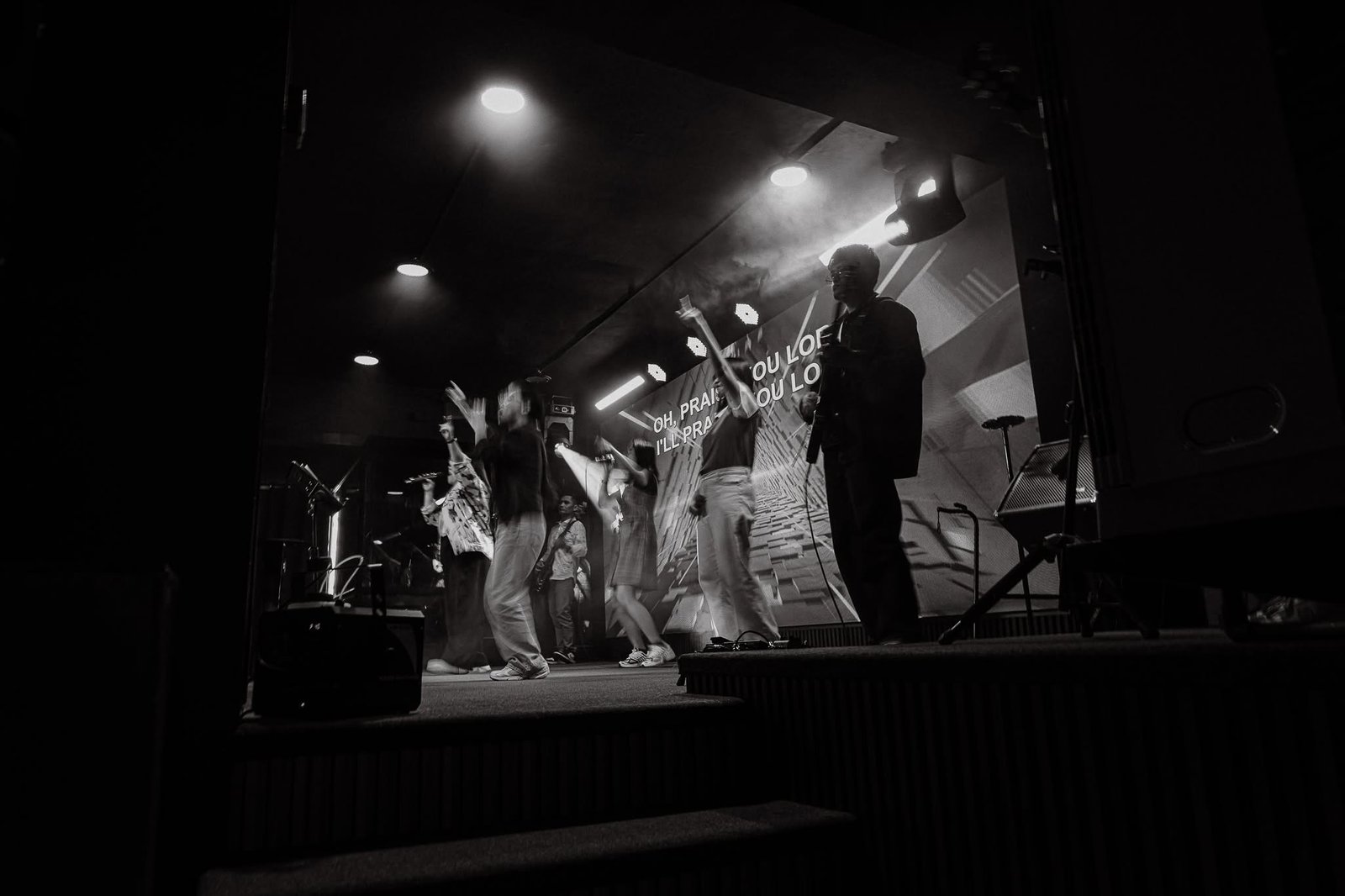
If you have ever walked off a stage after a Sunday service feeling empty — even after the congregation responded well — you may have been performing instead of leading. The two can look identical from the outside. On the inside, they feel completely different.
What performance looks like in worship
Performance happens when the leader's focus is on how they are coming across. You find yourself checking the congregation for reactions. You feel deflated when a song doesn't land the way you hoped. You rehearse more to impress than to prepare. None of these things are sinful on their own, but when they become the center of your motivation, you have shifted from shepherd to entertainer.
The congregation can sense it too. There is a certain tightness that comes from a leader who is self-conscious. The room follows the leader's inner state more than most people realize.
What calling looks like
Leading from a sense of calling means your goal is simply to create a clear, unobstructed path for people to meet with God. Your job is to get out of the way while still doing your job excellently. You prepare hard so that during the service your hands and voice can operate on muscle memory while your heart is focused on the same thing the congregation is focused on — Jesus.
Leaders who operate from calling are less shaken by technical problems, less rattled by thin congregational response, and less dependent on applause. They can hold a room in quiet stillness as easily as they can lift it into celebration, because the goal is never energy for its own sake.
How to shift from performance to calling
Start with your personal devotional life. A leader who only ever engages with worship songs in a rehearsal context will almost inevitably drift toward performance mode, because rehearsal is inherently evaluative. Spend time worshiping privately with no one watching, playing songs that are not on the Sunday setlist, letting the music be between you and God only.
Before each service, take a moment to consciously release the outcome. You cannot make the congregation respond a certain way. You can only be faithful with the opportunity in front of you. Pray something simple: "Lord, this is your service, not mine. Use me as you need."
Finally, seek accountability. Ask a trusted pastor or team member to speak honestly with you about what they observe from the side of the stage. Performers rarely invite that kind of feedback. Leaders welcome it.
A note on excellence
Calling does not mean carelessness. God deserves your best preparation, your best vocals, your best musicianship. The point is not to lower your standards but to examine your motives. Pursue excellence in service of the people and in honor of God, not in service of your own reputation. That subtle shift in orientation changes everything.