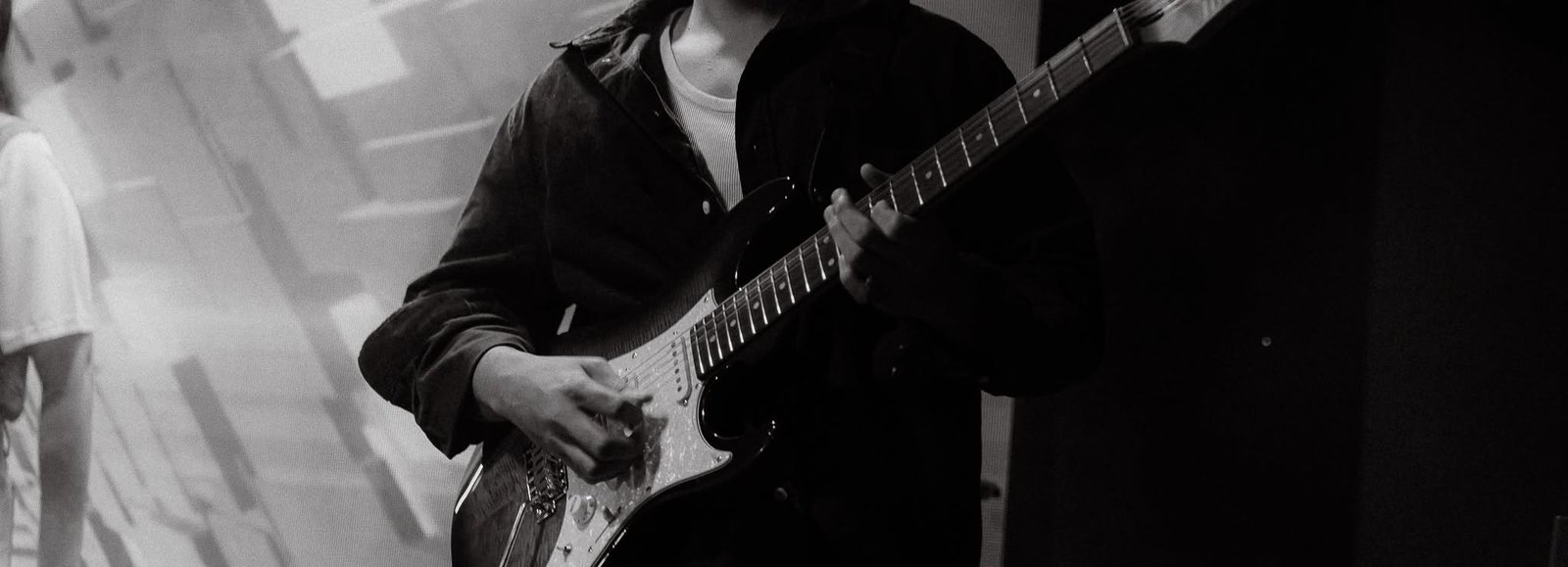
Most of the worship songs we play at Light Church Olongapo use some variation of the same three or four chord progressions. That is not a creative limitation. It is part of why worship music works the way it does.
The progressions that show up week after week in worship are there because they create a specific kind of emotional space that lets the congregation stop thinking about the music and focus on the moment. Here is what we have learned from playing them for over 10 years.
Why Simple Chord Progressions Work Better in Worship
The goal of a worship chord progression is not to be interesting. It is to be invisible. When a congregation is singing and the harmony feels natural under the melody, they are not thinking about the chords.
They are thinking about the words and what those words mean. Unusual or complex progressions pull attention to the music itself instead of creating space for the moment.
This is why you hear the same progressions in worship music across every style, every era, and every congregation. Familiarity is not a weakness here. It is the mechanism.
Recognizable harmony lets people settle in quickly and trust the music to carry them forward. That is exactly what it is supposed to do.
The Progression We Come Back to Most
In Nashville Number terms, it is 1-5-6m-4. In the key of G, that is G, D, Em, C. In the key of A, it is A, E, F#m, D. This one progression appears in more contemporary worship songs than any other combination we have come across, and we have been playing some version of it almost every Sunday at Light Church Olongapo for years.
Part of why it works so well is the 6m chord. The minor chord sitting in the middle of a major progression adds emotional weight without pulling the song into a dark or unresolved place. It lifts and then grounds, which matches what a lot of worship music is trying to do: invite and then anchor.
When we bring a new guitarist onto the team, this is the first progression we teach them. Once it is in the fingers across a few keys, they can work through most of our Sunday setlist. If you are just starting out with worship guitar and only have time to learn one progression well, make it this one.
When We Add the 2m Chord for More Depth
When a song or a section of the service needs to carry more emotional weight, we move to progressions that bring in the 2m chord. In the key of G, that is Am. In Nashville Number terms, it shows up as 1-2m-4-5 or 6m-2m-4-5 depending on where we want the tension to land.
The 2m chord creates a sense of longing and movement that the straight 1-5-6m-4 does not always have. We use it most in bridges and in songs meant to feel more contemplative. The minor chord in that position introduces a question that the 5 chord and the return to 1 answers. It creates a small resolution at the end of each cycle that is hard to explain in words but very easy to feel in a room that is actually worshiping.
Why the Same Progression Sounds Different in Each Key
One of the things that keeps worship from feeling repetitive even when you play the same progression week after week is that keys have different characters. The 1-5-6m-4 in G sounds bright and open. In Bb it feels fuller and more grounded. In D it has a warmth that works well for slower, more reflective songs.
We take advantage of this intentionally when planning our setlists. If a song has been in our rotation for a long time and starts to feel routine, we try it in a different key before retiring it. Sometimes that is all it takes to make a familiar song feel new again, both for the team and for the congregation.
How We Explore New Progressions Before Rehearsal
When we want to try something outside our usual patterns, our Chord Progression Generator is where we start. You choose a key and a mood, and it suggests progressions that work within that key and feel. It helps when we are preparing an original moment in a set and want to find something that works without just guessing.
The Circle of Fifths is also useful for understanding why certain chords feel related and which keys share the most common chords with each other. If you are already working with the Nashville Number System, the circle of fifths is the natural next step for understanding how progressions translate across keys.
Chord progressions in worship are not about demonstrating what you can play. They are about creating a foundation stable enough for a congregation to stop thinking about the music and start experiencing the moment. The progressions that show up every week are there because they work. Learn them deeply, play them with intention, and trust what they do in the room.