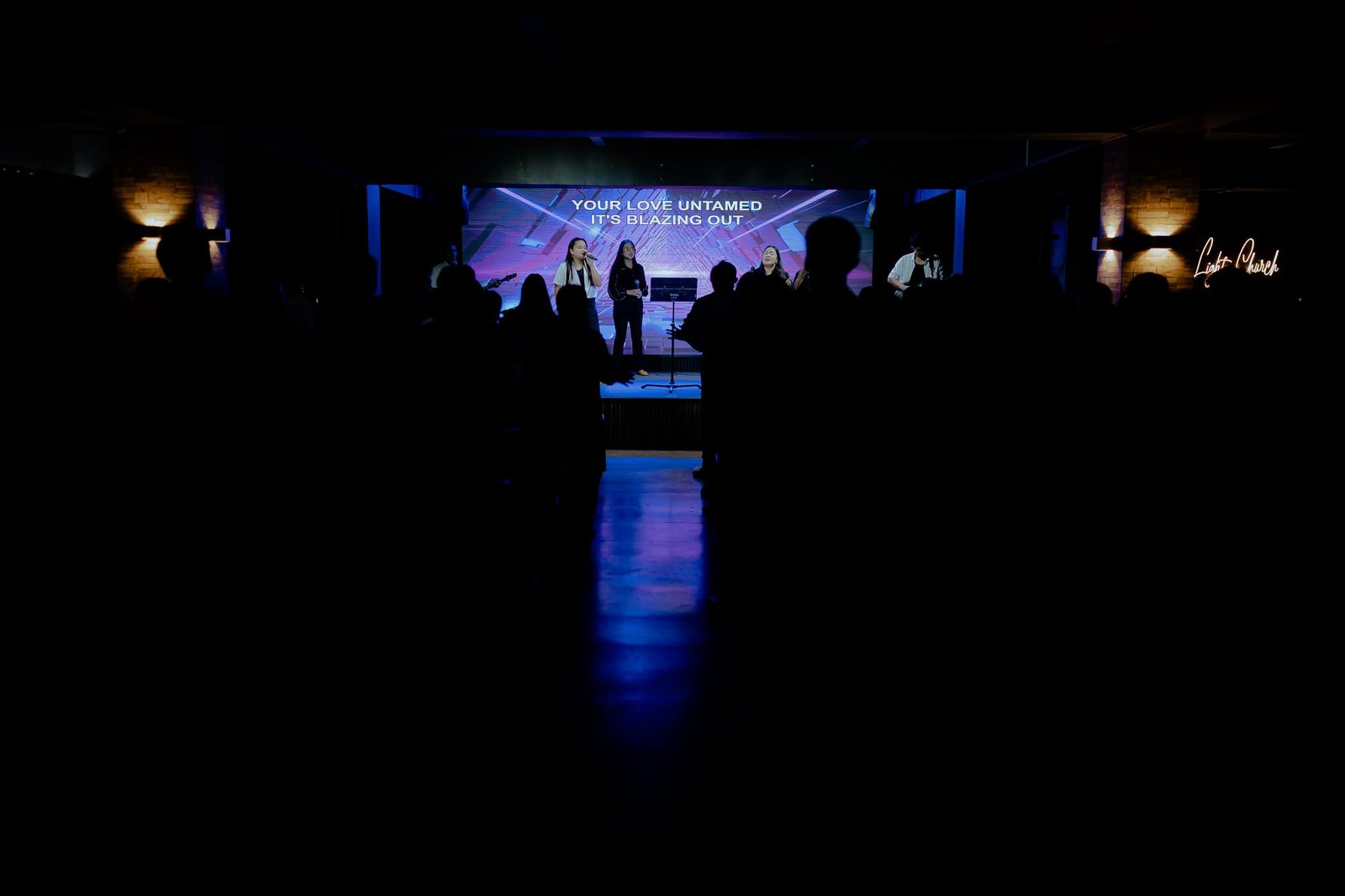
I have been leading music at Light Church Olongapo for a long time now, which means I have also been making and recovering from setlist planning mistakes for a long time. The early years especially were full of them. Not catastrophic, service-destroying mistakes. Quieter ones. The kind that produce a Sunday that is fine but not great, and that leave you with a vague sense that something was off without being able to name exactly what.
Looking back, most of those Sundays were caused by the same handful of errors that I see repeated in worship teams across different churches. I want to lay them out honestly because the fastest way to stop making a mistake is to understand exactly what the mistake was and why it did not work.
Mistake One: All the Slow Songs Together
In our early years we had a strong conviction that worship should be reverent and reflective, and we translated that into setlists that were heavy with slow, gentle songs. Sometimes three or four slow songs in a row before anything with a pulse. The intention was sincere. The result was a congregation that gradually disengaged over the first fifteen minutes of the service until they were mostly just standing politely.
What we did not understand then is that congregational singing requires some physical energy to sustain. Slow songs are not passive activities but they do not generate the kind of energy that keeps a room engaged over an extended period. A set that starts slow, goes slower, and then slower still does not deepen worship. It fatigues it.
We learned to front-load at least one song with enough rhythmic energy to gather the room before going to the slower, more intimate material. That one change made the slow songs more powerful because the congregation arrived at them with more in the tank.
Mistake Two: Key Jumps With No Thought
For a long time I chose songs without thinking about what key each one lived in. I would pick a song in G, then a song in Eb, then a song in B, all in a row. The musicians would work it out, the songs would get played, but there was always a slight sense of disorientation between songs that I attributed to other causes for longer than I should have.
Once I started using the Key Finder to check the key of each song in my setlist and then looking at the sequence of those keys together, I could see the problem immediately. The key jumps were creating a kind of harmonic turbulence that the congregation was feeling as a loss of flow even though they had no language for it.
Now I plan key flow as a deliberate part of setlist building. If I need to include a song in a key that sits awkwardly next to the song before it, I either adjust the key of one of them using the Transpose Calculator or I look at whether there is a connecting chord or a brief instrumental moment that can ease the transition. The goal is for the congregation to feel the set as a continuous experience rather than a sequence of separate events.
Mistake Three: Choosing Songs the Team Could Not Play Confidently
There was a season where I got into the habit of putting new songs or challenging songs into the Sunday setlist before the team had fully learned them. My logic was that Sunday would be good practice, that playing in front of a congregation focuses the mind and accelerates learning. This turned out to be mostly wrong.
Playing an incompletely learned song in front of a congregation does not focus the mind. It splits it. The musician is simultaneously trying to remember the next chord change, trying to play with feel, trying to watch the worship leader, and trying to be present in the worship moment. None of those things get done well. The congregation can feel the tentativeness in the playing even if they cannot identify it.
The rule we adopted is straightforward: a song does not appear in a Sunday setlist until every player on the team can play it without thinking about the notes. Thinking about the notes is for rehearsal. Sunday is for everything that happens after the notes become automatic.
Mistake Four: Ignoring the Sermon Until the Day Before
For our first year or two we planned the music mostly independently of the sermon. We would find out the general topic on Friday or Saturday and adjust if something felt obviously misaligned. The result was a lot of Sundays where the music and the message were sitting in parallel but not really working together.
Once we started meeting with our pastor at the beginning of the week, early enough to build the setlist around what he was preparing to say, the integration improved dramatically. Songs that are chosen in conversation with the message do something that independently chosen songs cannot do. They prime the congregation for the specific thing the message is about to open. The sermon lands on ground the music has been tilling.
Mistake Five: Treating the Setlist as Final Before Rehearsal
In our early years I would send out the setlist and treat it as settled. If someone said in rehearsal that a song was not landing right or a key was uncomfortable, I was reluctant to change it because I had already communicated the plan. This was ego more than wisdom.
The setlist exists to serve the service, not to protect the planner's choices. If rehearsal reveals that a song is not sitting right in its current position, moving it takes thirty seconds and often makes a significant difference. Now I send the setlist as the starting plan and explicitly tell the team that nothing is locked until we have played through the full sequence at the end of Saturday rehearsal.
All of these mistakes were fixable and all of them taught us something that improved how we plan. If you have been doing this for a while and some Sundays feel flat without a clear explanation, run through this list. The answer is probably in here somewhere. Use our setlist planner to build and adjust your sets, and give yourself the space to treat the plan as a plan rather than a commitment until you have actually heard it played.