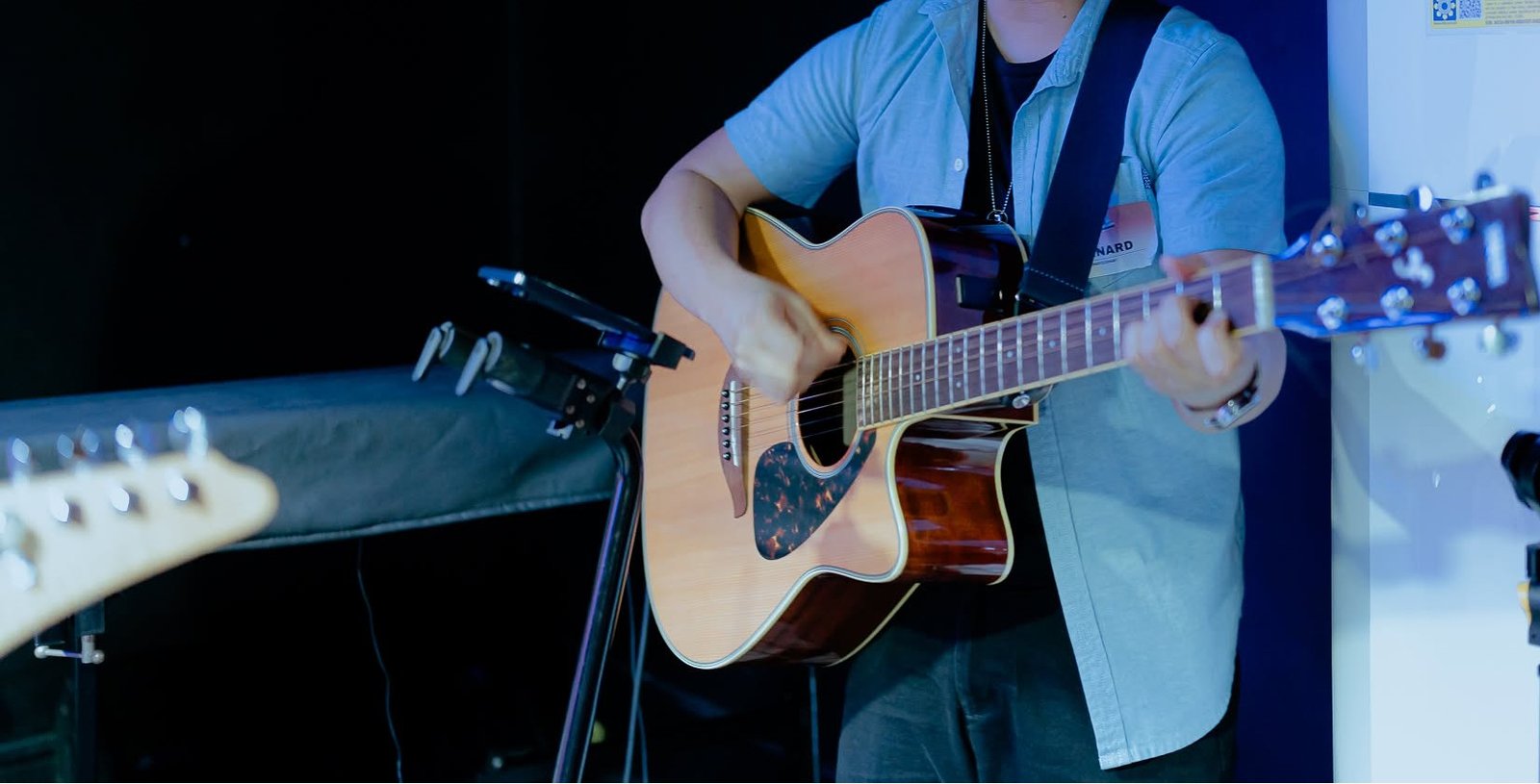
There was a phase in my early years of leading worship where I could not understand why Sunday mornings sometimes felt more difficult than Saturday rehearsals. We would have a great rehearsal, everything clicking, everyone confident. Then Sunday would come and something would feel slightly off. Not enough to fall apart, but enough that I could feel the musicians working harder than they should have been, and I could feel myself concentrating on the playing instead of the worship.
A musician friend of mine who had been playing in churches for much longer than I had said something simple that reframed my entire approach: "You rehearse until you know it. You should practice until you forget you know it." That sentence took me a while to fully understand, but once I did, I changed how we prepare for Sunday mornings.
Knowing a Song Is Not the Same as Owning It
When you learn a song, you are building the conscious knowledge of it. You know the chords, you know the structure, you know the arrangement. That is essential and it is step one. But at the knowing stage, your brain is still actively involved in retrieval. You play the verse, you remember the chorus is next, you remember the first chord of the chorus, you execute it. Conscious process, step by step.
What happens in a live worship setting is that your environment fills up with things competing for your conscious attention. The congregation is in front of you. The monitoring mix is not quite right. The worship leader is moving to a section you did not expect. Your strap is slipping. Any of those things pulling at your conscious mind leave less capacity for the song itself, and the cracks start to show.
When a song is owned rather than just known, the playing happens below conscious recall. Your fingers know where to go without your brain consciously directing them. You can respond to the worship leader, feel the room, make a dynamic choice, and the music keeps coming because it is coming from somewhere deeper than active memory.
How We Get There: The Practice Layers
The first layer is always individual practice before the group rehearsal. Every musician on our team is expected to know their part before they arrive on Saturday. Not perfect, but familiar. That way Saturday rehearsal is about blending together, not about individuals learning their parts in front of each other.
For individual practice, I recommend starting slower than the song's actual tempo. Use the metronome set to about sixty to seventy percent of the real BPM and play through the song at that reduced speed. Slow practice builds accurate muscle memory. If you only ever practice at full speed, your fingers are always catching up to themselves and the subtle errors get baked in along with the correct movements. At slow speed, every chord change, every transition, every rhythmic pattern gets laid down cleanly. Then you bring the tempo up gradually and the accuracy transfers.
The BPM you are aiming for is whatever the song uses in the recording. If you have not measured it yet, the BPM Tap Counter takes about ten seconds to give you the number. Write it down, put it next to the song name, and use it every time you practice so you always know what full speed looks like.
The Strum Pattern Matters More Than You Think
One of the most common places songs break down for guitarists is not in the chord changes themselves but in the strum pattern. The chord changes are the conscious part that gets practiced. The strum pattern is often autopiloted, which means whatever feels natural to the individual player shows up in the final performance, and that may or may not match the feel of the song.
I started being deliberate about strum patterns during individual practice after I noticed that our team's rhythm playing was technically correct but emotionally flat in certain songs. The Strum Pattern Guide helped me identify the right pattern for each song's feel and communicate that to our guitarist. Once he practiced the specific pattern instead of defaulting to a general strum, the songs started breathing differently.
How We Run Saturday Rehearsal
We run through each song in Saturday rehearsal at least three times. The first run is for refreshing memory and getting the basic feel. The second run is specifically for transitions: verse to chorus, chorus to bridge, endings. We stop and drill any transition that did not feel smooth. The third run is from top to bottom without stopping, simulating Sunday morning as closely as possible.
After the third run, we do a quick check. Does this song feel natural or does it still feel like we are playing it carefully? If it feels careful, we do a fourth run or we go back and slow-drill the section that is causing the careful feeling. We do not leave for Sunday with a song that still feels careful. Careful on Saturday becomes shaky on Sunday when everything else is competing for attention.
Give It a Few Sundays
There is a final stage that only time can produce, and that is the experience of playing a song through actual services. The first Sunday a song feels rehearsed. The third Sunday it starts to feel natural. The fifth Sunday it becomes part of the team's musical vocabulary, something you can call on at any moment and trust completely.
That is the goal for every song that becomes part of your regular setlist. Not mastery, but genuine ownership. The song stops being something you play and becomes something you know in your hands, your ears, and your instincts. When you get there, the playing gets out of the way and the worship takes over.